Site visit report ·
Lake Huntington Site Visit Report
 Prepared by Sullivan County Soil & Water Conservation District
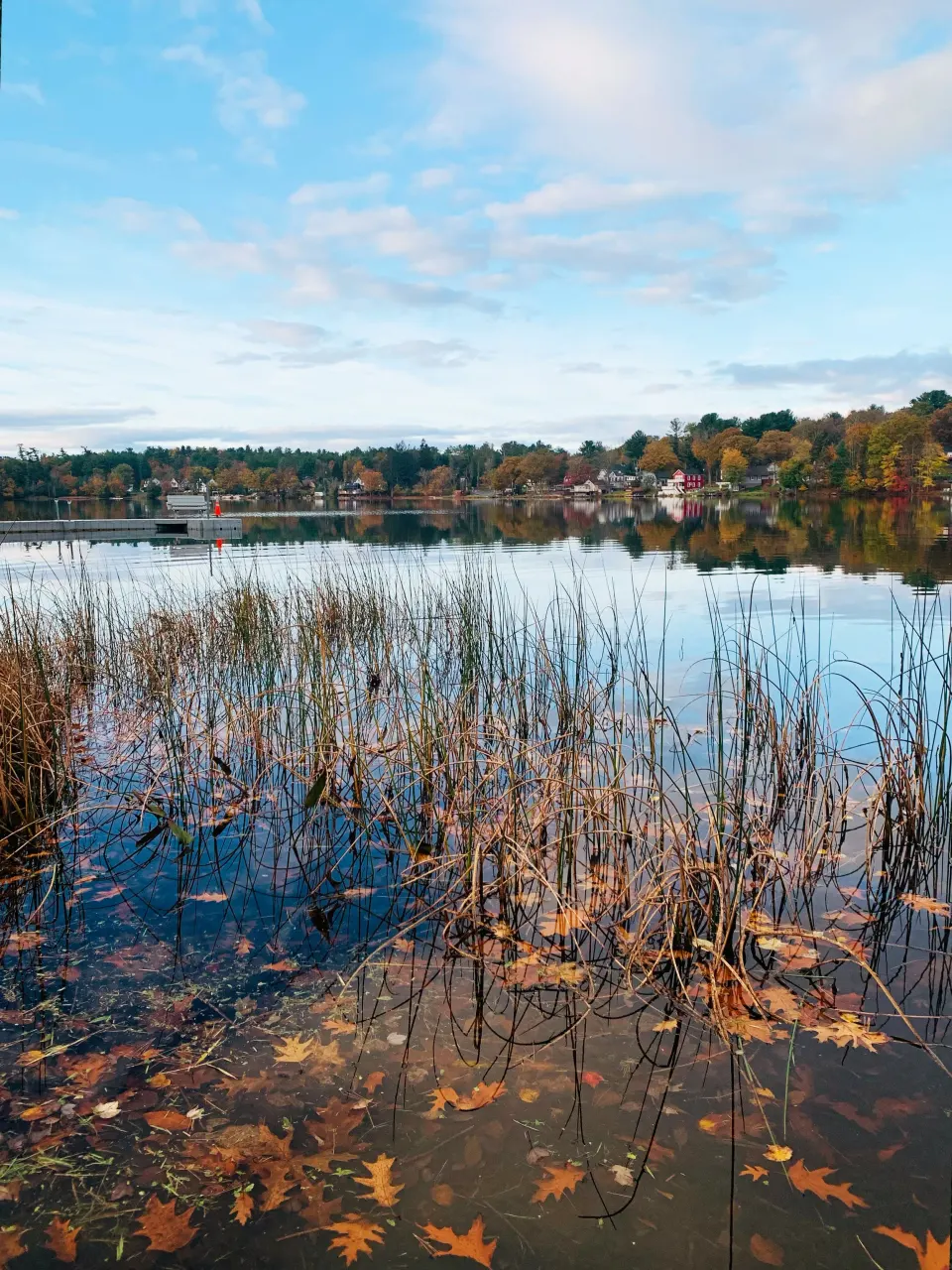
In a site visit report dated November 6, 2026, the Sullivan County Soil & Water Conservation District looked at shoreline erosion, water quality, algae, and the runoff and drainage that carry pollution into the lake. Their recommendations start at the water’s edge: keep geese off the shoreline, and use trees, shrubs, buffers and wetland plants to stabilize the shore, prevent runoff and filter out pollutants.
What they looked at
- Shoreline erosion
- Water quality
- Algae
- Pollution entering the lake through drainage sites
- Runoff
- A possible increase in phosphorus from the geese population
Recommendations
-
Keep geese off the shoreline
Create barriers that prevent geese from walking on the shoreline.
The report flags the geese population as a possible source of extra phosphorus in the lake.
-
Plant trees and shrubs along the shore
Trees and shrubs help stabilize the lakeshore while also taking up nutrients from the lake.
Stabilizing the bank addresses erosion; taking up nutrients addresses the water quality and algae concerns the report lists.
-
Create buffers on shoreline property
Create buffers on shoreline property to help prevent runoff.
The report lists runoff among its concerns about pollution entering the lake.
-
Add wetland and shallow-water plants
These plants typically specialize in filtering pollutants out of waterways, especially at inlet sites.
Inlets are where drainage enters the lake, so filtering there catches pollution early.
What to plant
Potential species for planting:
Trees
- Basswood
- Willow sp.
- American Sycamore
- Paper/River Birch
- Eastern Red Cedar
Shrubs
- Ninebark
- Chokecherry
- Buttonbush
- Red Osier Dogwood
Wetland plants
- Common/Swamp Milkweed
- Northern Blue Flag
- Cardinal Flower
- Pickerel Weed
Please note this is not an exhaustive list just some suggestions.
From the District
Tree & shrub sale
The District’s finalized order form comes out at the beginning of January. Trees range from 12” to 24”. Typical pricing:
- Bundle of 10
- $25
- Bundle of 50
- $100
- Bundle of 100
- $175
Follow-up
- Contact in January for the tree and shrub sale
- Review water test results
- Continue to monitor for invasive species
Further reading
Ponds: Aquatic plant management
Cornell Cooperative Extension, in partnership with Holgerson Lab, Cornell University · August 2026
- “Plants absorb excess nutrients, which outcompetes algae.”
- “Stabilize your pond’s shoreline with deep-rooted plants, which will also intercept nutrients before they reach your pond.”
- “Always use native plants.”
- Recommended for shorelines
- Pickerelweed, bulrush, broadleaf arrowhead; also rushes, swamp milkweed, horsetail, sweetflag and water willow
- Not recommended
- Cattail (Typha species) and any non-native species (e.g., Phragmites, yellow-flag iris)
Helpful information
- Beneficial Buffers: Native Plants for Ponds & Lakes in New York State SOLitude Lake Management
- Guide to Water Gardening in New York State (PDF) NYS DEC
- Pond and lake wildlife: Canada geese Penn State Extension
- Road Salts Lake Champlain Basin Program This study focuses on a lake in the Adirondacks, but the same principles can be applied here.